Supporting someone's dream can be one of the most loving things we do, or the slow start of resentment. The difference isn't how much we give. It's why we give it.
I recently spent eighteen days crossing the Indian Ocean on a 40-foot catamaran, from the Maldives to Malaysia. Five of us aboard, a lot of weather, and dolphins on the bow almost every day.
The boat belongs to Nico and Lynette, a South African couple in their early sixties who have just set out on their long passages together.
A few years ago, Nico was in a major paragliding accident. The wind shifted on him, and he hit a rock wall, cracked his skull, lost his helmet, blacked out, and crash-landed, breaking his back as well. Lynette was there, and she held him in her arms not knowing whether he would make it (imagine witnessing that, and being in that moment).
He went on to spend weeks in the ICU, and he lost his sense of smell. At first, doctors weren't sure he would even survive. Once he was healing, they told him to expect depression, moodiness and emotional reactivity, and that he wouldn't be able to do a lot of the things he loved again.
Fast forward to today. He has continued his entrepreneurial journey, raised a family, owns properties, and is a published author, and he's sailing around the world on his own boat with the love of his life. (For more of his story, check out his short, easy-to-read book on Amazon, Read Seven and Grow Rich (published under his given name, Samuel N. Basson), which shares the books that taught him the most, with great notes on each one, alongside his own story.)
These are some of the happiest, most loving, faith-based people I've ever met. He grilled dinner for us in the middle of the ocean and taught all of us how to sail.
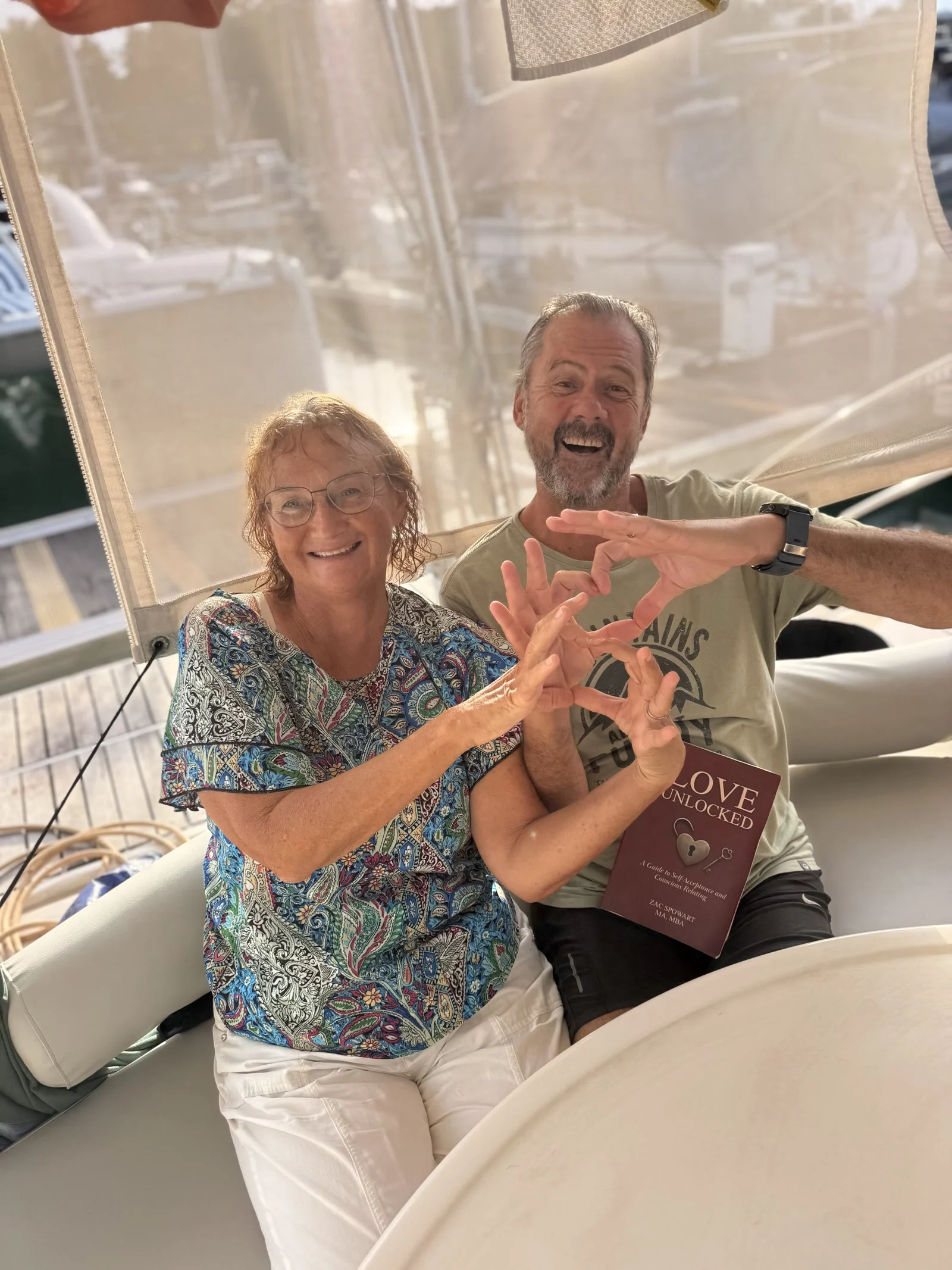
It's fun to note that Lynette likes sailing, but she isn't out there because ocean crossings are her dream... she's out there because they're his.
So is that love, or is it sacrifice? How would you even know the difference? And is it healthy to sacrifice for your partner?
Is it healthy to sacrifice for your partner?
Every relationship asks us to give things up: time, money, where we live, how we spend our weekends. That alone isn't the problem (we'd never get anywhere if every decision had to be equally exciting for both people).
What matters is where the giving comes from.
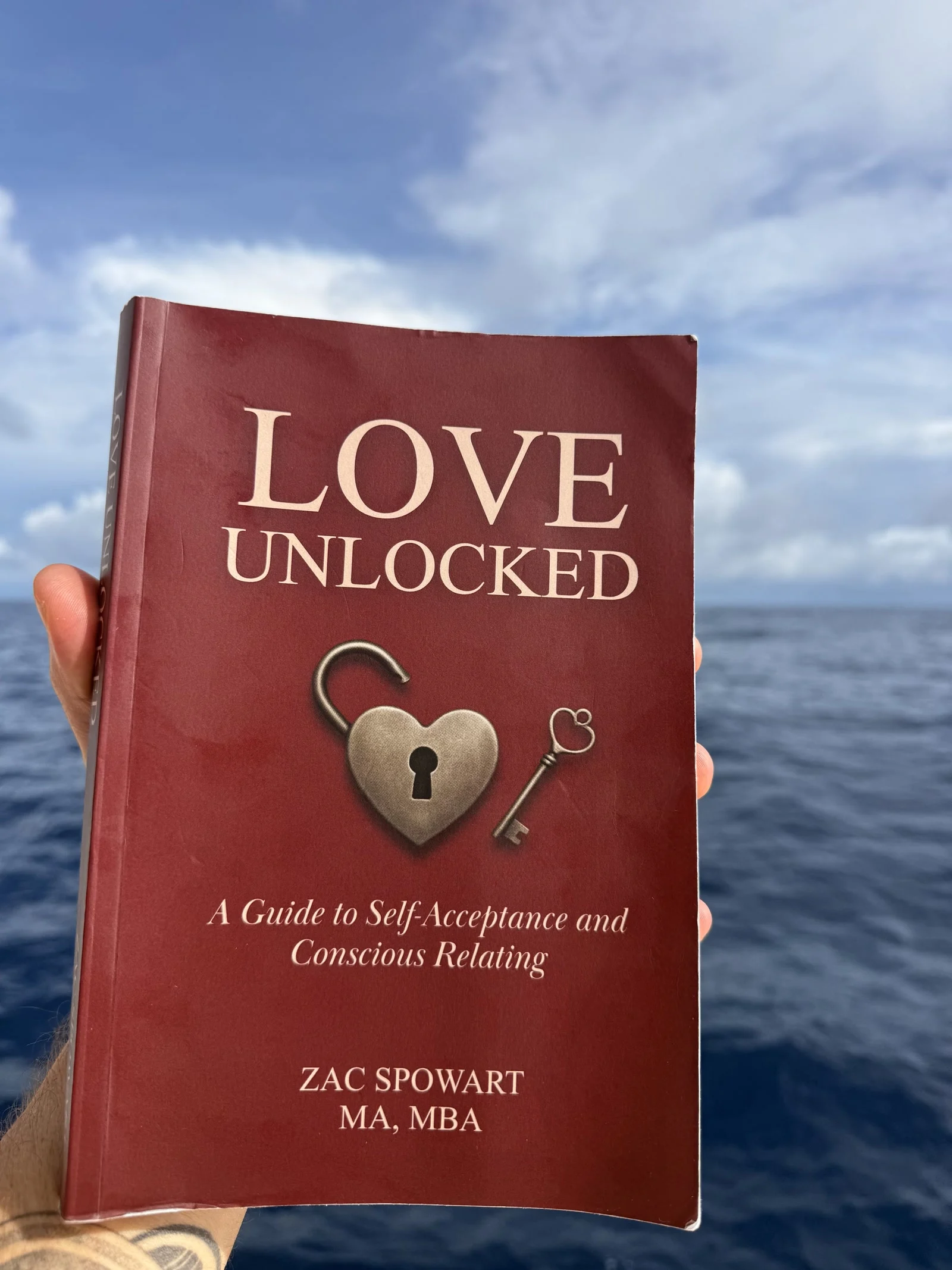
In Chapter 12 of my book Love Unlocked, Love Is Kind but Not Easy, I draw a line between two things that look identical from the outside: generosity and martyrdom.
Generosity is an act of freedom. We give because we want to, we choose what to give and how much, and there's no silent contract attached. It feels clean, even joyful (and the other person can feel the difference).
Martyrdom often disguises itself as kindness. The difference is that martyrdom involves giving what we don't necessarily want to give. Often it shows up as a way to keep the peace or to feel like a good partner, giving up something of ourselves for the other person in the name of, arguably, love. And that's where resentment quietly begins to grow. (If that sounds familiar, I've written about where caring ends and codependency begins.)
Two people can make the exact same move, whether that's following a partner across an ocean, taking the job in a new city, or putting their savings into someone else's business. The thing is, one of them is being generous, while the other is keeping score.
How do you know if you're keeping score?
Martyrdom creates an invisible ledger, where every favor, every compromise, every "fine, we'll do it your way" or "whatever you want" gets written down somewhere in the mind, waiting to be repaid. The trouble is, when that repayment doesn't come, frustration builds and needs go unspoken.
You've probably heard the saying about the straw that broke the camel's back. The thing about the camel is that we already know it can carry an awful lot. Keep piling one thing on top of another, though, and eventually one tiny straw tips the balance. Resentment works the same way, which is why blowups so often happen over something seemingly small, usually to the other person's complete surprise and often out of nowhere.
A few questions worth sitting with:
- If my partner never thanked me for this, would I still choose it?
- Am I saying yes because I want to, or because I'm afraid of what happens if I say no?
- Is there something I need that I haven't said out loud?
If those answers sting a little, or you find yourself answering differently than you expected, that isn't a verdict on your relationship. It isn't proof that you're in a bad relationship, or that you need to leave or do something drastic. It's information, and often that information says more about us than about them: how we're choosing to show up, and where our boundaries might be missing.
What I saw on that boat
Eighteen days in a small space shows you a lot about people (and about yourself, if we're being honest). Everyone was wet, tired and underslept at some point. You can't dry your towels, you can't get much time alone, and the crossing takes as long as the wind decides it takes. We're at the mercy of nature.
What I noticed in Lynette was choice.
She showed up for his dream fully, and it was clear she had chosen it, even if she teased him about it from time to time. There was no quiet tally running in the background. And Nico didn't take it for granted either. He led by example: he cooked, he taught, and he looked after everyone aboard, including her. He loved on her all day long, calling her darling, sweetie and honey, and made sure she was as cared for as possible. She didn't have to run any shifts or stand any watches, because he made sure there was extra crew aboard, so she could read her books, have her downtime, and be as comfortable as possible.
Every night, the two of them prayed together over dinner, with all of us included, which was so beautiful, and then they'd share a brief little kiss. Whatever your own beliefs, you could see what that ritual did for them. It was a daily reminder that they were in it together, and that the dream belonged to both of them. They were sharing the moment, and they were sharing love.
That's the difference. Martyrdom makes one person's dream the other person's burden. Generosity turns it into something shared.
How to support your partner's dream without losing yourself
Choose it out loud. "I'm in, because I love sharing this with you" lands very differently from "fine," "whatever you need" or "whatever you want." Say the first one only if it's true, and if it isn't true yet, say that instead. Don't be afraid to honor your truth. Forcing yourself into something you really don't want to do is far worse, because that's exactly how silent martyrdom starts.
Keep something that's yours. Supporting a partner's dream doesn't mean having no dream of your own, and it doesn't mean running a tally of "I did this for you, so now you owe me that." Even on a boat, there's a book, a practice, a project that belongs to you (even if it only gets an hour of your day). Two whole people make a stronger partnership than one person and their supporting cast, which is the heart of how to stay whole while deeply in love.
Name the cost before it turns into a debt. If something is getting hard for you, say so while it's still small, before it quietly becomes something you feel you're owed. "I genuinely love doing this with you, and I'm also exhausted. I need a break right now." That's honest, and it's far kinder than silence that turns into resentment later.
Let them show up for you too. Generosity flows both ways. We're not keeping score here, but a partnership needs both giving and receiving. If we're always the ones adjusting, it's worth asking whether we've ever actually asked for anything in return, or whether we're silently waiting for the other person to read our minds.
Check in on the why, regularly. Dreams change, and so do the reasons we support them. What was a gift a year ago can become an obligation without anyone noticing. A simple "Is this still working for you?" keeps it honest, or even more specifically, "How are you feeling about this right now?"
After a long crossing, Lynette wanted a break, and Nico is honoring it. They're keeping the boat in Malaysia for three months before deciding when to head back out, and with good reason. They've just completed a beautiful crossing together, and that's part of the give and take.
You can sail the world together without sailing every single day, nonstop. You can choose to take a break, be on land, and travel together in other ways. And when your partner comes along even though she isn't 100% sure she wants to, you can make sure she doesn't have to stand any watches, and that there's extra crew aboard.
There are lots of ways to show up for a partner who says yes, without taking advantage of their yes. That's what checking in looks like.
Final thoughts
Nico survived an accident that should have ended his story, and he's spending this chapter of it on the open ocean. Lynette is right there beside him because she has decided this is where she wants to be: playing games, laughing and bantering, day in and day out. She also recognizes the sacrifices Nico has made for her over the years. The giving runs both ways, and that's what makes it work.
My invitation to you this week is simple. Look at what you're giving in your relationship, and ask whether you're still choosing it. Love doesn't keep score, and when it starts to, something needs to be said.
And if there's an area where you're afraid to receive, is there a block there too?

Ready to go deeper?
If this resonated, my book Love Unlocked goes further into kindness, boundaries, and how to love without losing yourself.
If you're giving more than you can sustain and don't know how to say it, that's exactly the kind of work we do in 1:1 Clinical Coaching, including a 90-day container for people ready to stop keeping score. Learn more at zacspowart.com.